
Decks and patios: choosing what goes underfoot
Materials matter less than what sits beneath them.
Advertising and lead generation · Images on this site are AI-generated illustrations.
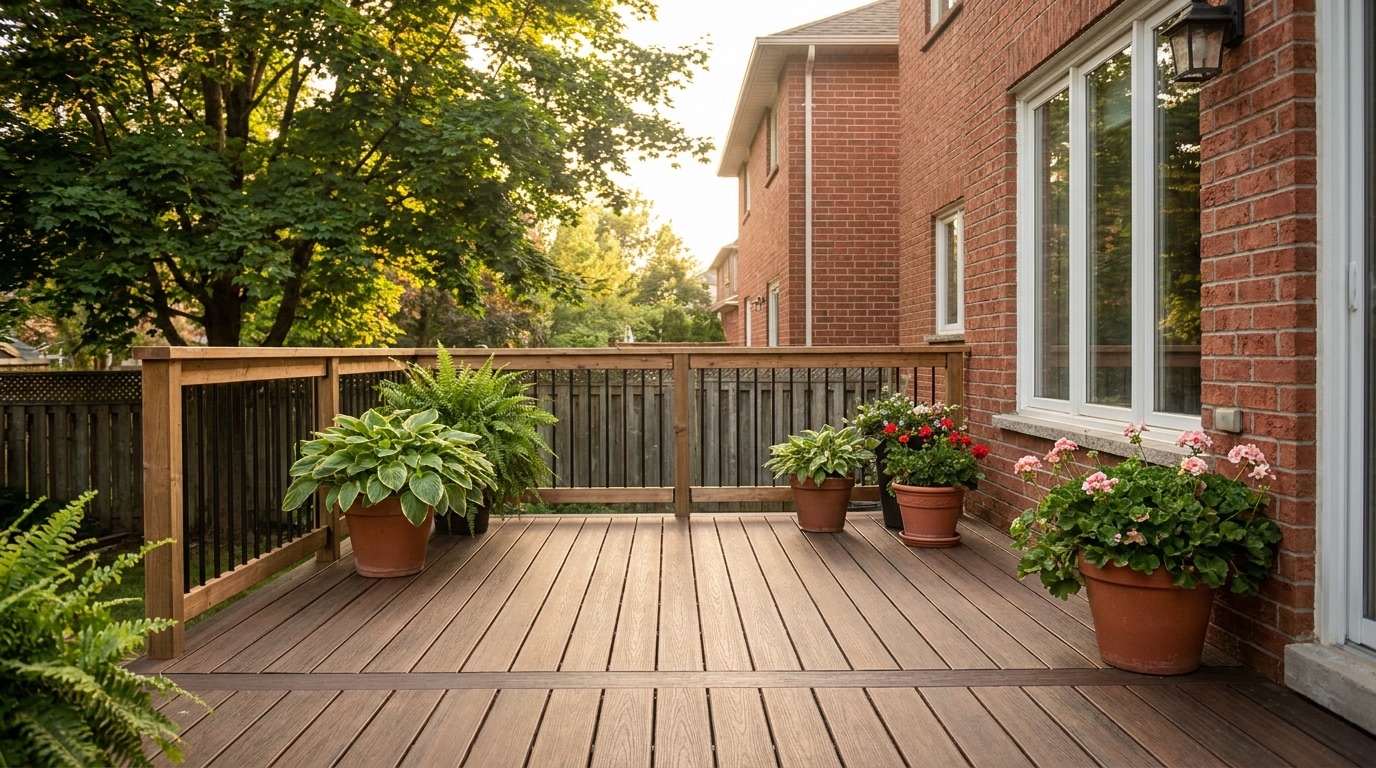
Decking: three common choices
| Material | Typical strengths | Trade-offs |
|---|---|---|
| Pressure-treated lumber | Widely available, usually the lowest upfront cost of the three | Needs regular cleaning and sealing; can check, cup or twist as it dries |
| Cedar | Naturally rot-resistant, light, warm look | Softer surface; weathers to silver unless maintained |
| Composite | Little staining or sealing; consistent colour | Higher upfront cost; can get hot in direct sun; follow the maker’s spacing and fastening rules |
Comparisons are general. Products vary by manufacturer and grade.
Frost comes first
In most of Canada the ground freezes and thaws every year, and soil can heave. Deck footings that are attached to the house or carry heavy loads generally need to reach below the local frost depth, which differs a great deal between, say, coastal British Columbia and the Prairies. Your municipality’s building department or a qualified designer can tell you the figure and footing type that apply to your lot.
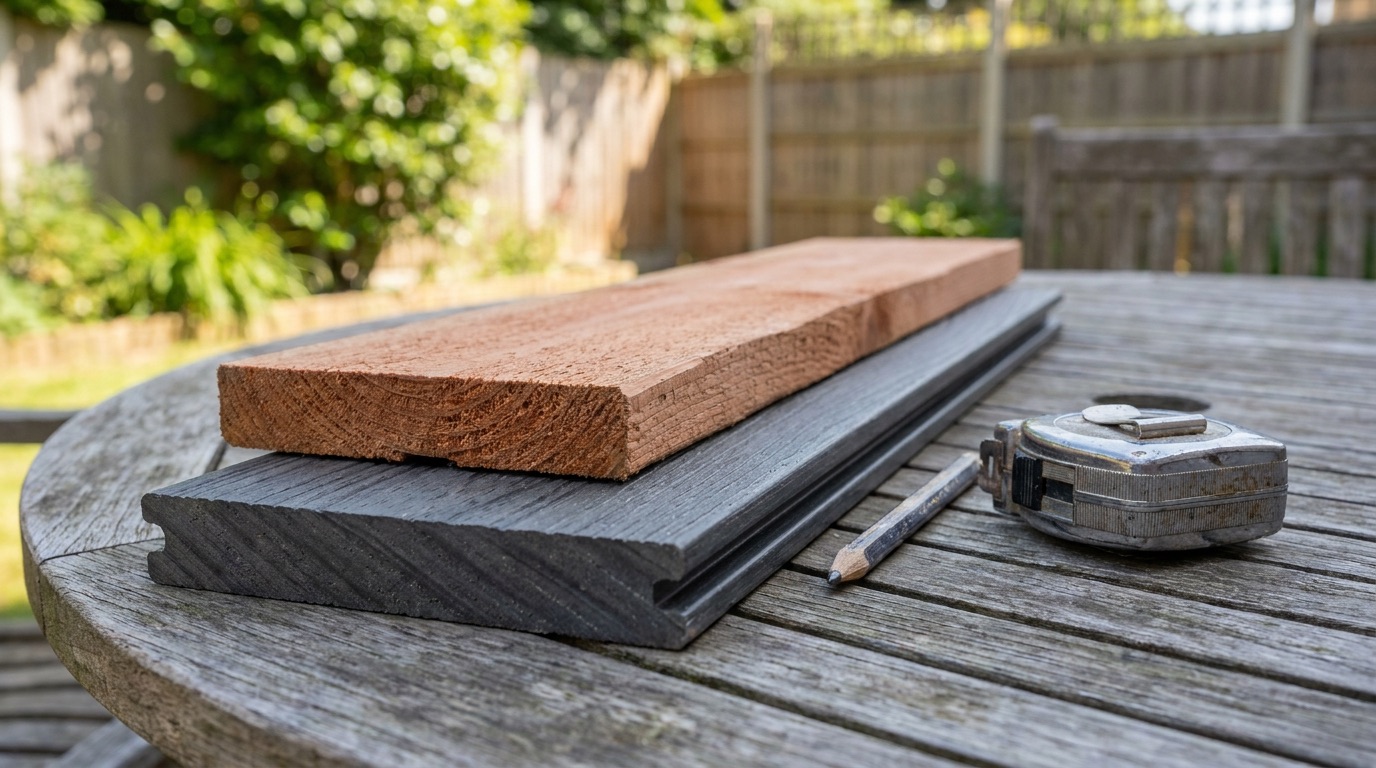
Patios: pavers, poured concrete, stone
- Interlocking pavers sit on compacted granular base and sand. They flex slightly with frost, and an individual unit can be lifted and reset. Edge restraint and a well-compacted base do most of the work.
- Poured concrete gives a clean continuous surface, but it is rigid, so control joints, a proper base and drainage decide whether it cracks. Repairs show.
- Natural stone suits informal or formal looks. Thickness, setting method and the stone’s own frost resistance matter; ask where it comes from and how it performs in freeze-thaw.
Drainage and slope
Water should leave the patio, and the house, not pool against either. A gentle fall away from the foundation is the usual principle, with downspouts discharged well clear. Decks need airflow underneath and a plan for where meltwater goes in spring.
Questions to settle first
- Is the deck attached to the house, and how high is it above grade?
- What is under the site: clay, sand, fill, roots?
- Who removes old material, and where does the spoil go?
General information only, not advice. Outer & Beyond is advertising and lead generation published by MOAJ Digital Marketing Inc.; we do not do the work. Images on this site are AI-generated illustrations. About this site.